


 Marian Süße
 Lisa Heinemann
Click here for the German version.
The global economy is rapidly entering a new era of digital transformation. However, outdated infrastructures and slow innovation processes limit adaptability and long-term competitiveness.
The necessity of digital transformation to remain competitive in the global market.
The need for comprehensive digital transformation is greater than ever in many German small and medium-sized enterprises as well as large corporations. For a long time, Germany was considered a benchmark for innovation and efficiency. Now the German economy stands at a turning point: Will innovative technologies and digital tools secure its competitiveness?
The basic principle is clear: Those who invest in the right areas, modernize processes, and strategically implement new technologies can remain successful in the long term. The Industrial Metaverse aims to offer a comprehensive, technical solution. But what exactly is it, and how do you implement it?
Whitepaper published: a practical guide
The published white paper “Beyond the Hype: How to Get Started with the Industrial Metaverse” can be accessed on the following website. It addresses potential challenges and risks, as well as implementation examples and opportunities for integrating the Industrial Metaverse into the workplace.
What exactly does the term “Industrial Metaverse” refer to in the context of the new paradigm?
Despite the lack of a universally accepted definition, the Industrial Metaverse approach often emerges from the interplay of technologies such as Artificial Intelligence (AI), the Internet of Things (IoT), and Extended Reality (XR) using a common exchange standard. It thus represents a new form of digital twin, offering measurable benefits such as lower costs and faster innovation cycles through real-time data integration, immersive environments, and intelligent automation.
Summary
This white paper outlines the development steps and unique selling points of the Industrial Metaverse. A key differentiator is the integration of physical and digital operations for improved decision-making. This marks the beginning of the transformation from Industry 4.0 to immersive digital environments. Naturally, this transformation includes challenges such as distributed data in isolated silos, heterogeneous IT/OT infrastructures, cultural reservations, and a lack of clearly defined roles. The published white paper presents strategies for overcoming these obstacles. Concrete use cases demonstrate that the first steps toward the Industrial Metaverse can already be implemented quickly. Further key advantages are discussed in the paper.
If you like our white paper or would like to delve deeper into specific technologies, please feel free to contact us at blog@iwu-zukunftsfabrik.de. Also, we have previously reported on the Industrial Metaverse on our blog: “ Exploring the Industrial Metaverse ”.
Cover image/ header : Downloaded from Pixabay on 09.02.26, royalty-free.


 Jennifer Greim
 Lisa Helbig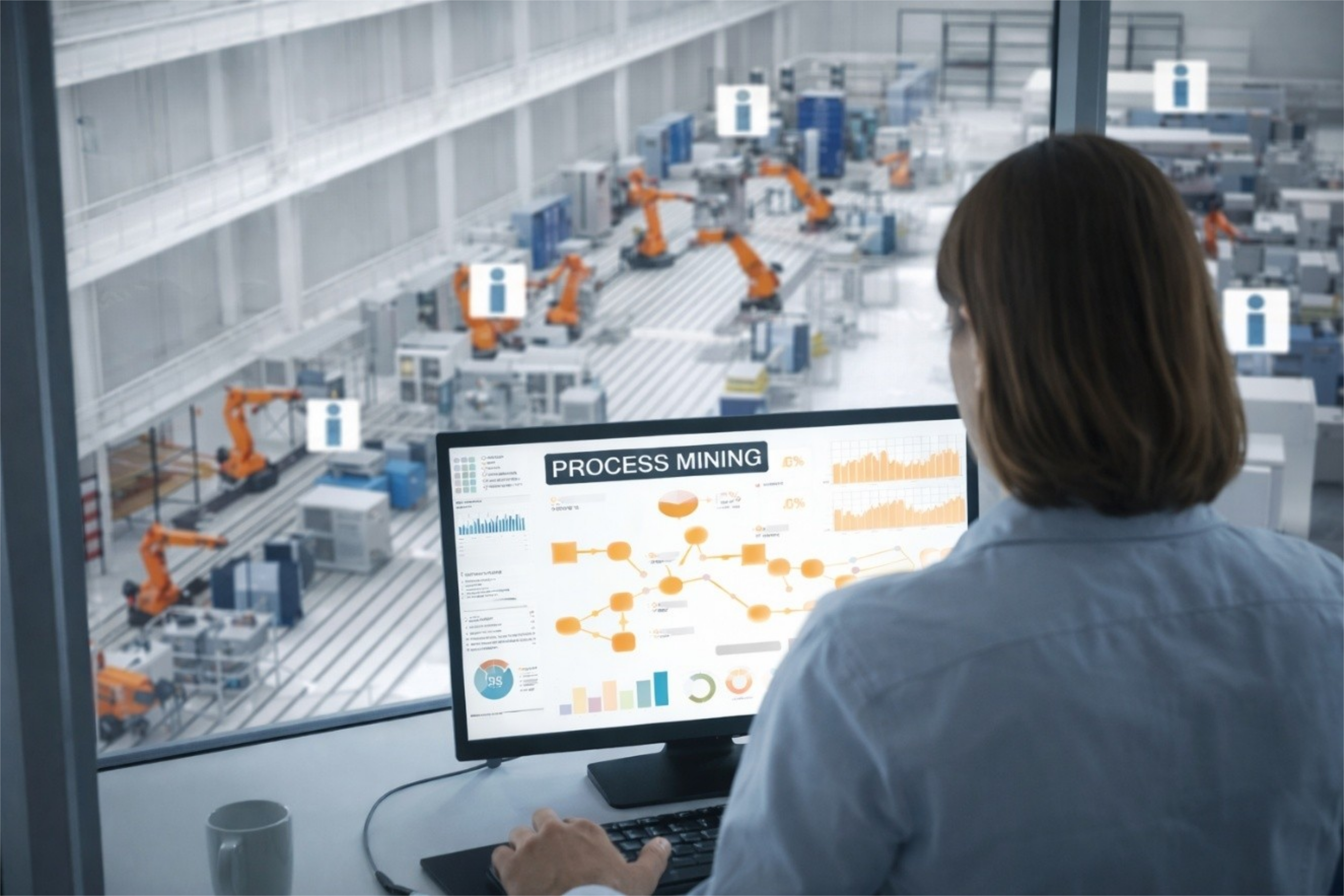
 Maxi Grobis


Kommentare hinzufügen